
Coalescence: The digitization process at the Centraal Museum Utrecht depot
August 13, 2026
The following post is a copy of our August newsletter.
Between March and May, d_archive and Alu Studios started the first phase of the digitisation process at the Centraal Museum depot. This stage focused on studying the selected garments, their fabrics, the construction techniques, and the specific challenges they pose for digitisation workflows.
The teams were supported by Fashion Curator Ninke Bloemberg, Fashion & Costume Collection Manager Denise van der Vegt and Curator in training Renée Ingenbleek, who supervised the process and assisted with the handling of delicate garments and accessories.
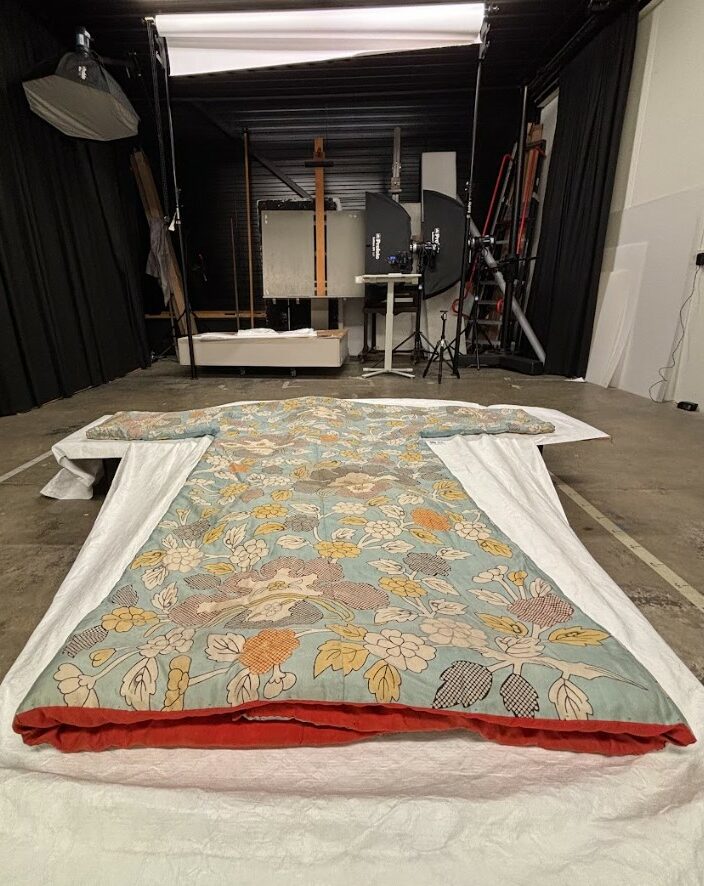
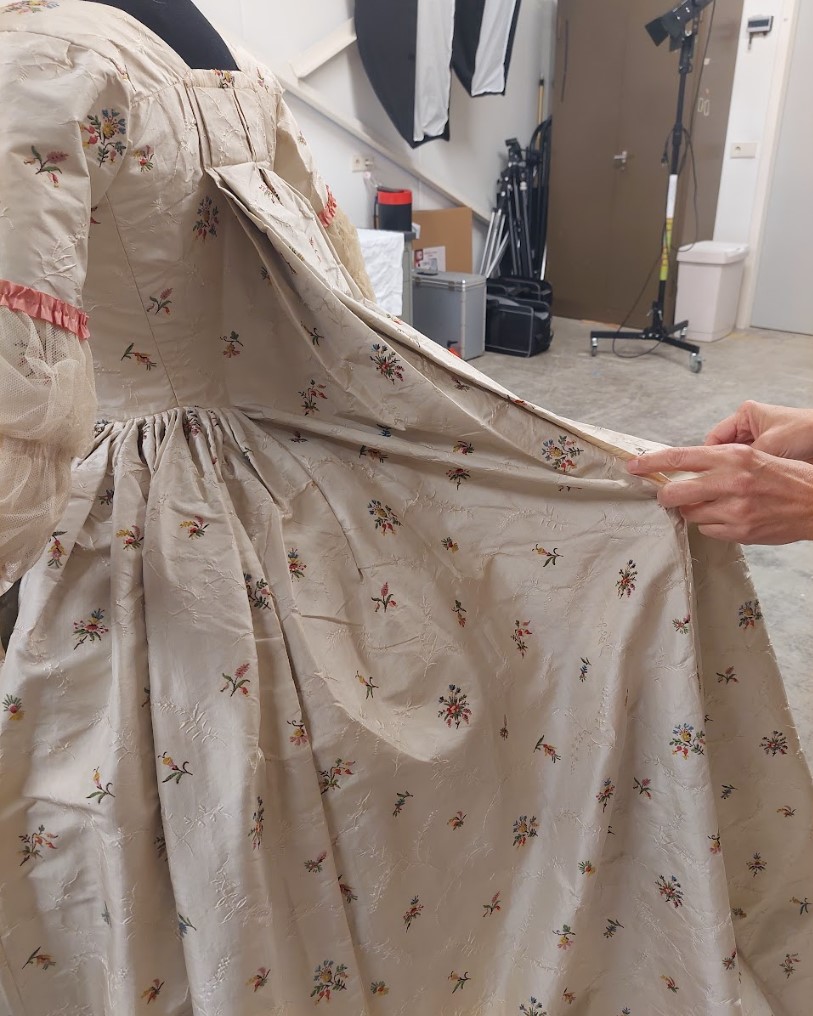
The project specifically focuses on garments made from imported Asian fabrics: silks, damasks, velvets, and dyed cloths. These materials embody the systems of global exchange between Asia and Europe from the 17th to 19th century.
They were different aspects taken in consideration for the selection:
Historical – These textiles played a central role in the emergence of the Dutch and broader European global economy. They carry histories of trade, cultural adaptation, and unequal power relations, including colonial expansion through military force, political and economic manipulation, and the violent appropriation of land, labour, and the means of production of goods such as silks, cotton and woven textiles. Each object is a testimony to cultural encounters, appropriation, and transformation.
Technical – The same material qualities that made these fabrics desirable are also what makes them notoriously difficult to digitise. Silk scatters light, damask reflects it unevenly, and velvet absorbs both light and reference points. This makes them challenging and ideal test cases to test the technical research questions and development of the workflow.
Conceptual – 3D fashion heritage projects are sometimes seen as a gimmick, as they are often used in interactive installations such as virtual fitting mirrors, that leave little room for nuanced stories; as a result, garments with complex or sensitive stories are often overlooked. With Coalescencewe deliberately focus on underrepresented pieces, ensuring, through close collaboration with Centraal Museum Utrecht and the involvement of external professionals, that they are digitised with care and their complex narratives are brought to light rather than obscured.
The objects
Japanese robe (1725 – 1775)
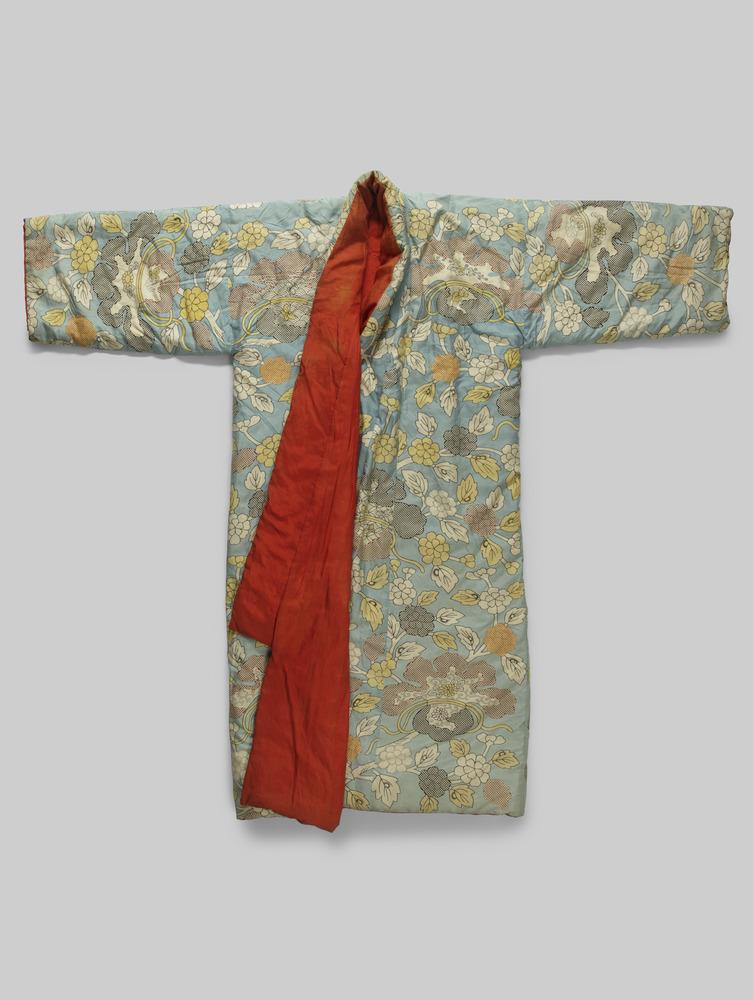
Image courtesy of Central Museum Utrecht. Link to object page.
An 18th-century Japanese robe featuring hand-painted and resist-dyed floral patterns. It reflects the Dutch fascination with Japanese goods and the exclusive trade relations maintained through Deshima.
Due to its fragility, the garment cannot be mounted on a mannequin anymore, and is only displayed flat. Digitisation offers new possibilities for reintroducing such pieces into exhibitions.
The robe’s simple cutting pattern and large printed surface make it an ideal starting point for testing how surface details captured through photos can be placed onto a reconstructed pattern-based model, allowing both studios to explore how images and pattern reconstructions can be merged.
Damask vest with silver buttons (1746 – 1750)
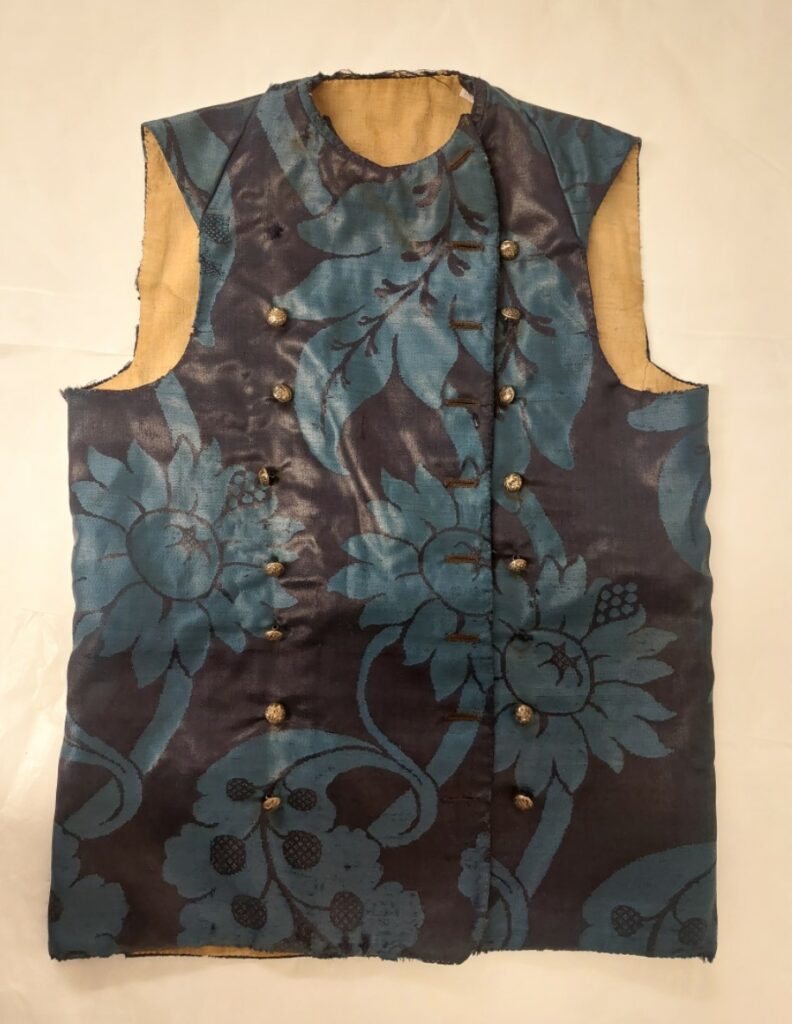
Image courtesy of Central Museum Utrecht. Link to object page.
A mid-18th-century blue damask vest with silver buttons, combining unusual pattern cutting with lustrous materials. The piece reflects inter-European trade and craftsmanship, with buttons likely made by silversmith Theodore van Dam, and silk damask likely manufactured in Europe, but clearly influenced by Asian textile traditions.
The reflective quality of the damask fabric presents a challenge for digitisation. The vest’s detailed buttons can be documented with close-up (macro) photogrammetry, another technique to try and integrate in the workflow.
Man’s Chintz dressing gown (1700 – 1800)
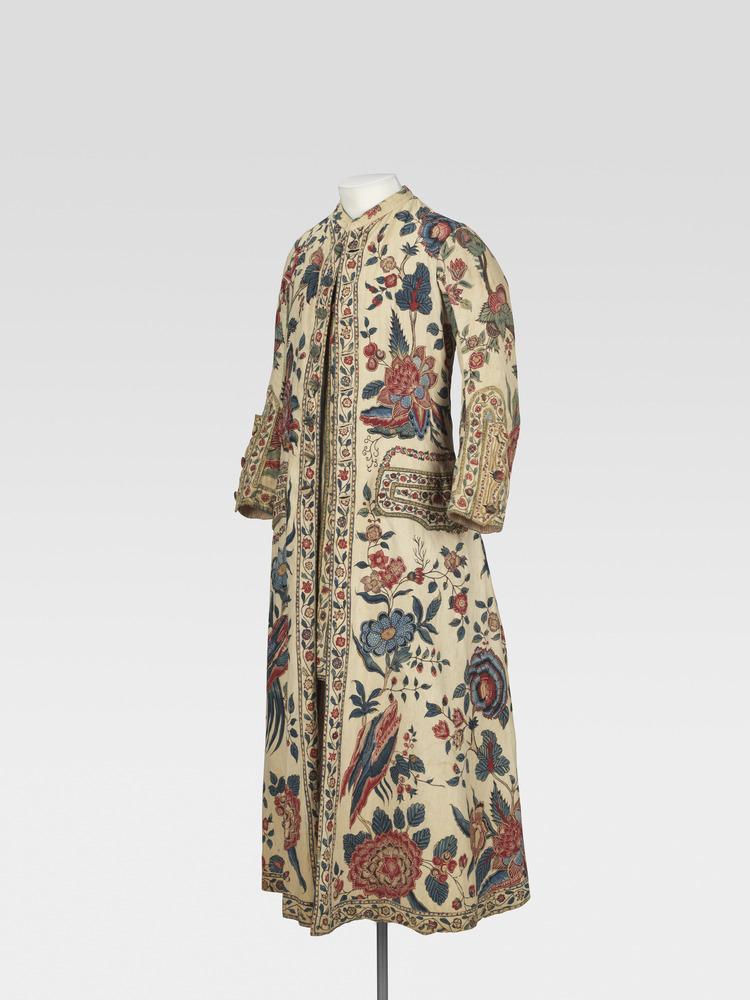
Image courtesy of Central Museum Utrecht. Link to object page.
This garment is quite unique, as it was unusual for Chintz garments to consider the placement of fastenings and pockets in the hand-painting process of the textile. When opened, the garment reveals an integrated waistcoat stitched into the interior, and a red striped linen lining.
The technical digitisation challenges of this object will mostly relate to the exact replication of the hand painted details and the layering of panels.
Robe à la Française (ca. 1780)
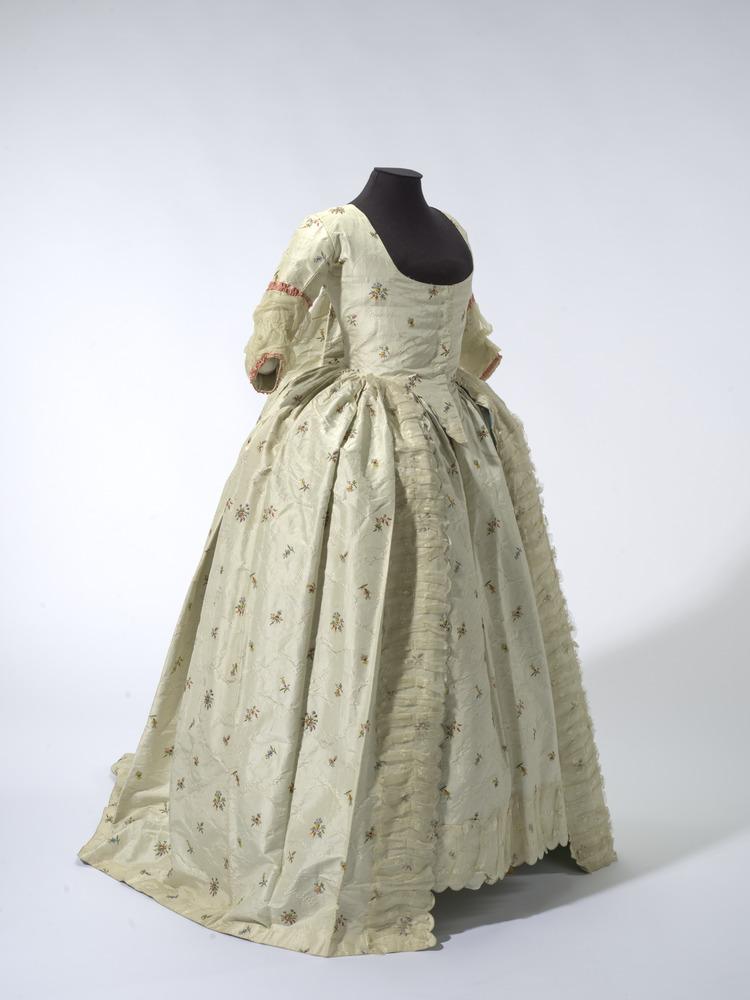
Image courtesy of Central Museum Utrecht. Link to object page.
A late 18th-century French-style gown composed of an overgown and skirt, featuring floral embroidery, tulle, and lace. The garment was selected for its complex patterning and as an example of European design incorporating imported Asian textiles.
From a 3D workflow perspective, this piece is particularly challenging due to the variety of techniques used in its construction and its intricate pleating. It offers an opportunity to test how data can move between digitisation methods, and to explore whether different techniques can be applied to different parts of the garment to create a truly hybrid model.
Parasol 1880 – 1890
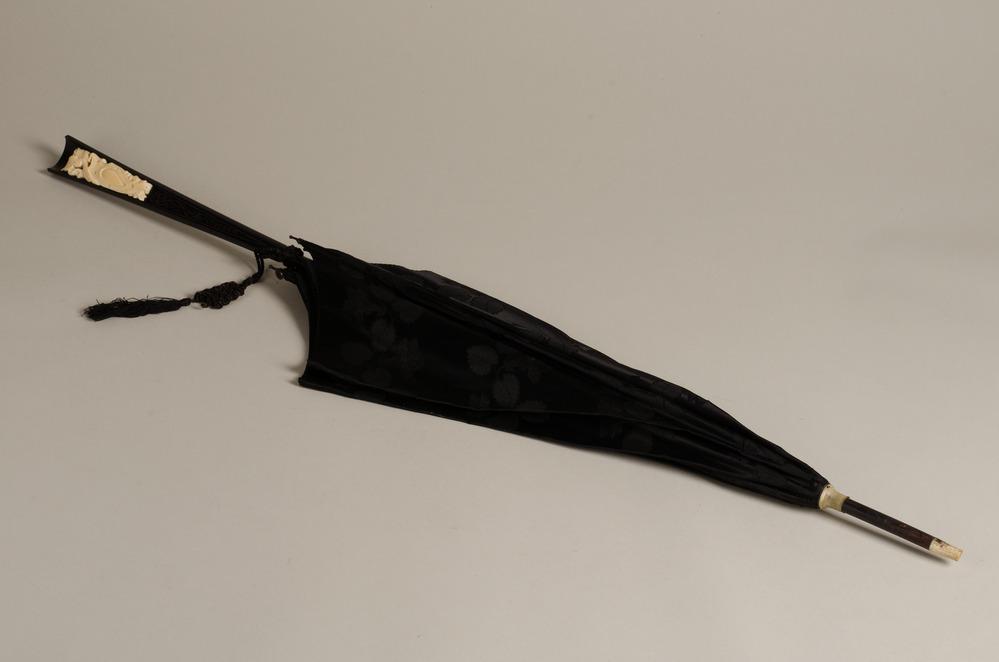
Image courtesy of Central Museum Utrecht. Link to object page.
A late 19th-century parasol in black and ivory, made of black silk satin, ebony wood and ivory details, with complex mechanical construction. The black fabric presents particular challenges for digitisation, while the object itself reflects European demand for Japanese goods following the Perry expedition and illustrates the dynamics of a globalising economy.
The challenge for creating a mixed-technique 3D replica is posed by the multimaterial construction of the object, as well as the deep black colour of both the silk cover and wooden handle, notoriously hard surfaces to capture with photogrammetry techniques.
d_archive and Alu teams are now deep in the digital experimentation process, on which we will send updates through our newsletter and our social media channels.
If you want more information or you feel like asking questions, please don’t hesitate to reach out via email: contact@darchive.io
Coalescence: Bringing Fashion Archives into the Digital Space is a collaborative project made possible by the support of:
STIMULERINGSFONDS | CENTRAAL MUSEUM UTRECHT | MODEMUZE | WERELDMUSEUM | WILLEM DE KOONING ACADEMY | EFHA